
Software teams are under constant pressure to ship faster while keeping reliability intact across increasingly complex systems. That pressure has reshaped how quality is built into products.
The old model no longer holds.
Building large in-house QA teams creates fixed capacity in a world that demands flexibility. So companies shift toward a different approach: embedding QA engineers directly into product teams.
This is why the category of top QA staff augmentation companies has emerged as a core part of modern engineering strategy. Instead of working as external vendors, these engineers sit inside delivery teams – writing tests, building automation, and moving in step with developers.
When it works, QA stops being a blocker. It becomes part of the delivery engine. Teams scale testing capacity on demand, automation arrives earlier, and release cycles move with less friction.
But the market is uneven.
Among the best QA staff augmentation companies, the biggest differentiator is how they integrate with client teams. Some providers become part of sprint rituals, CI/CD pipelines, and continuous delivery workflows, while others continue to operate from the outside, delivering work like traditional outsourcing vendors.
This ranking focuses only on providers that prove they can operate inside the system, not alongside it.
Methodology
This ranking evaluates QA staff augmentation providers using a five-dimension weighted framework. The focus is on demonstrated delivery capability: whether a company can supply qualified QA professionals, integrate them into an existing team, and maintain consistent performance as requirements change.
The final position reflects the combined weighted result across all five dimensions. No company was ranked based on a single metric, client logo, or marketing claim.
Data sources
The assessment uses publicly available information from:
Independent client reviews and ratings on Clutch.
Company websites and service documentation.
Published case studies and measurable project outcomes.
Public client references and testimonials.
Documented engagement models, QA capabilities, and industry experience.
Company websites were treated as first-party evidence. Claims were corroborated through independent sources where possible. Information that could not be verified was excluded or marked as unavailable.
Evaluation criteria
QA expertise and specialization — 30%: Depth of manual, automation, API, mobile, performance, security, and other testing capabilities.
Staff augmentation capability — 25%: Ability to provide qualified QA professionals, integrate them into client teams, support different roles and seniority levels, and scale capacity when needed.
Client validation — 20%: Volume, recency, and specificity of independent reviews, with particular attention to team quality, communication, reliability, and long-term delivery.
Delivery flexibility — 15%: Onboarding speed, engagement flexibility, time-zone coverage, team scalability, and ability to adapt to changing project requirements.
Case studies and measurable outcomes — 10%: Documented improvements in test coverage, regression time, defect rates, release speed, automation maturity, or testing costs.
Eligibility requirements
Only companies with publicly demonstrated QA expertise and a clear staff augmentation offering were considered. General development agencies where testing is only a minor supporting service, talent marketplaces, tool vendors, and crowdtesting-only platforms were excluded.
Editorial disclosure
This ranking was researched and published by DeviQA, and DeviQA is included in the evaluation. As a provider of QA staff augmentation services, we have a commercial interest in this market.
To reduce potential bias, DeviQA was assessed using the same criteria, weighting, and evidence requirements as every other company on the list. DeviQA received no additional consideration for publishing the ranking. Unsupported claims were excluded or marked as unavailable, regardless of the company they concerned.
This ranking represents DeviQA’s editorial assessment of publicly available evidence, not an independent certification. We recommend using it to create a shortlist and comparing several providers before making a final decision.
1. DeviQA
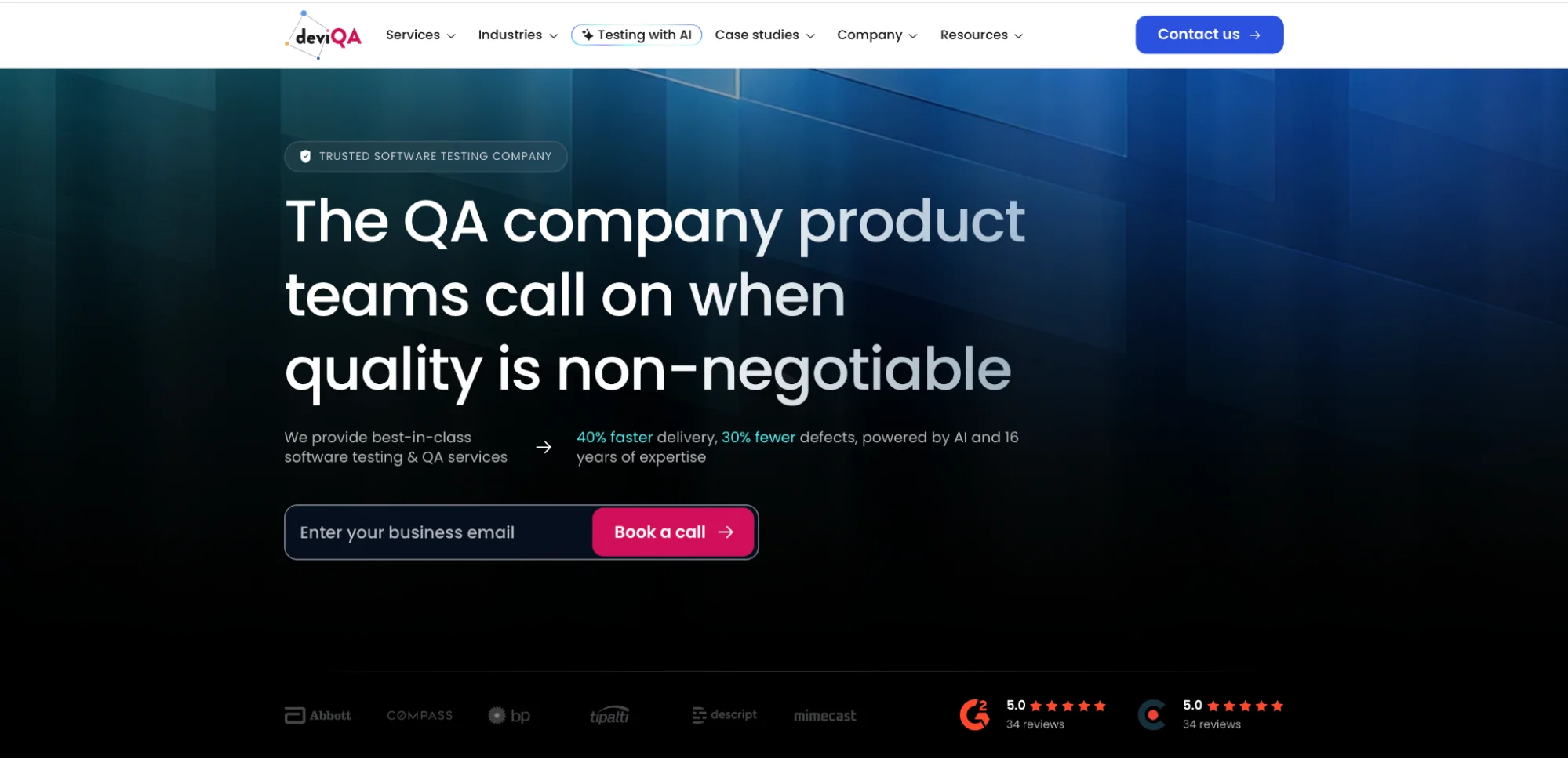
DeviQA is a specialized QA engineering company focused exclusively on software testing services and embedded QA staff augmentation. The company positions itself as a dedicated QA partner for product engineering teams that require scalable testing capacity and automation expertise. Its model is built around integrating QA engineers directly into Agile delivery environments rather than operating as an external testing unit.
Key facts
Founded: 2010
Employees: 200–500+
Minimum project size: $5,000+
Hourly rate: $25–$49
Clutch rating: 5/5
QA Staff Augmentation Focus
DeviQA provides embedded QA engineers and full QA pods that integrate directly into Agile teams. Engineers typically participate in sprint planning, backlog refinement, and CI/CD pipelines. Engagements range from single QA engineers to scaled teams covering full product test cycles.
Capabilities include manual QA, automation engineering (Selenium, Cypress, Playwright), API testing, performance testing, and mobile QA. The model supports rapid onboarding and scaling based on release velocity.
Services
Manual testing, test automation, API testing, performance testing, mobile testing, QA consulting.
Industries
SaaS, fintech, healthcare, e-commerce, logistics.
Evidence
Clutch rating: ~4.8/5 with dozens of verified reviews
Clients consistently report improved release stability and faster regression cycles
Example feedback: "Their engineers integrated directly into our sprint process and improved release confidence significantly."
Differentiation
Core strength: QA-specialized engineering organization focused entirely on embedded testing teams and end-to-end QA ownership.
Secondary advantage: Strong automation capability combined with structured manual QA execution and process design + AI QA ecosystem.
Market positioning: Positioned as a QA-dedicated engineering partner for SaaS and product-driven teams rather than general IT outsourcing providers.
Tradeoff: Not designed as a broad multi-service IT vendor beyond QA specialization.
2. Testlio
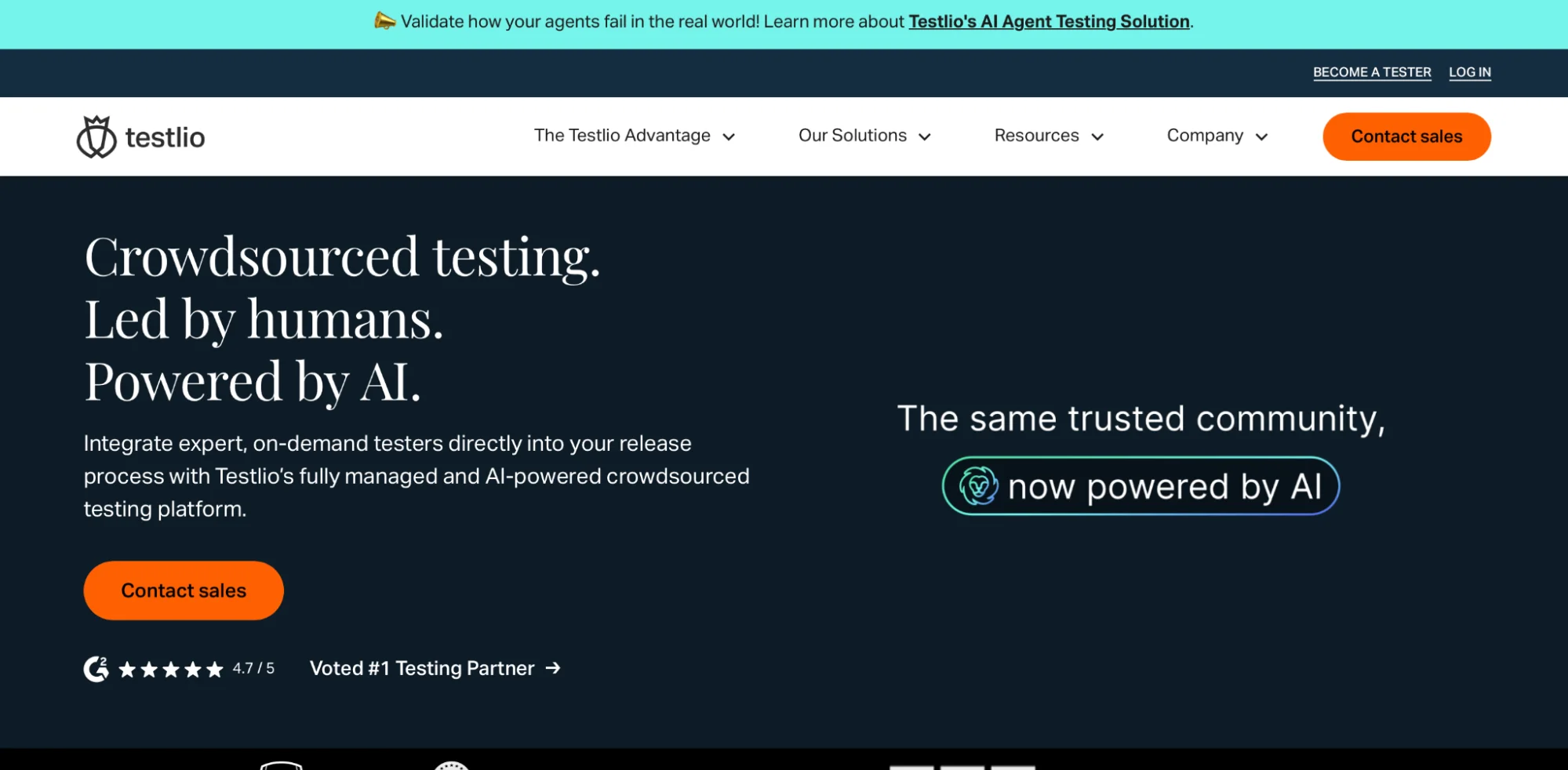
Testlio is a global QA services platform combining managed testing teams with distributed QA talent networks. It focuses on continuous testing at scale for digital products with frequent releases and global user bases. The company is commonly used by product teams requiring flexible QA capacity across multiple geographies.
Key facts
Founded: 2012
Employees: 500–1,000+
Minimum project size: $25,000+
Hourly rate: $50–$99
Clutch rating: ~4.8/5
QA Staff Augmentation Focus
Testlio provides embedded QA teams supported by a global network of testers and QA engineers. Their model is designed for continuous testing cycles rather than one-off QA engagements.
Engineers integrate into Agile workflows and support functional, regression, localization, and mobile testing. Strong emphasis is placed on scaling QA capacity during peak release periods.
Services
Manual testing, automation testing, mobile testing, localization testing, managed QA.
Industries
Media, streaming, SaaS platforms, fintech, consumer applications.
Evidence
Strong Clutch rating (~4.8/5) with consistent enterprise feedback
Clients highlight ability to scale QA rapidly during major releases
Example feedback: "They scale with us seamlessly during every major product release cycle."
Differentiation
Core strength: Distributed QA execution model designed for high-scale continuous testing.
Secondary advantage: Strong global coverage enabling localization and real-world testing scenarios.
Market positioning: Positioned as a continuous QA execution platform for high-velocity digital products.
Tradeoff: Less focused on deep embedded single-team ownership compared to boutique QA augmentation firms.
3. QA Mentor
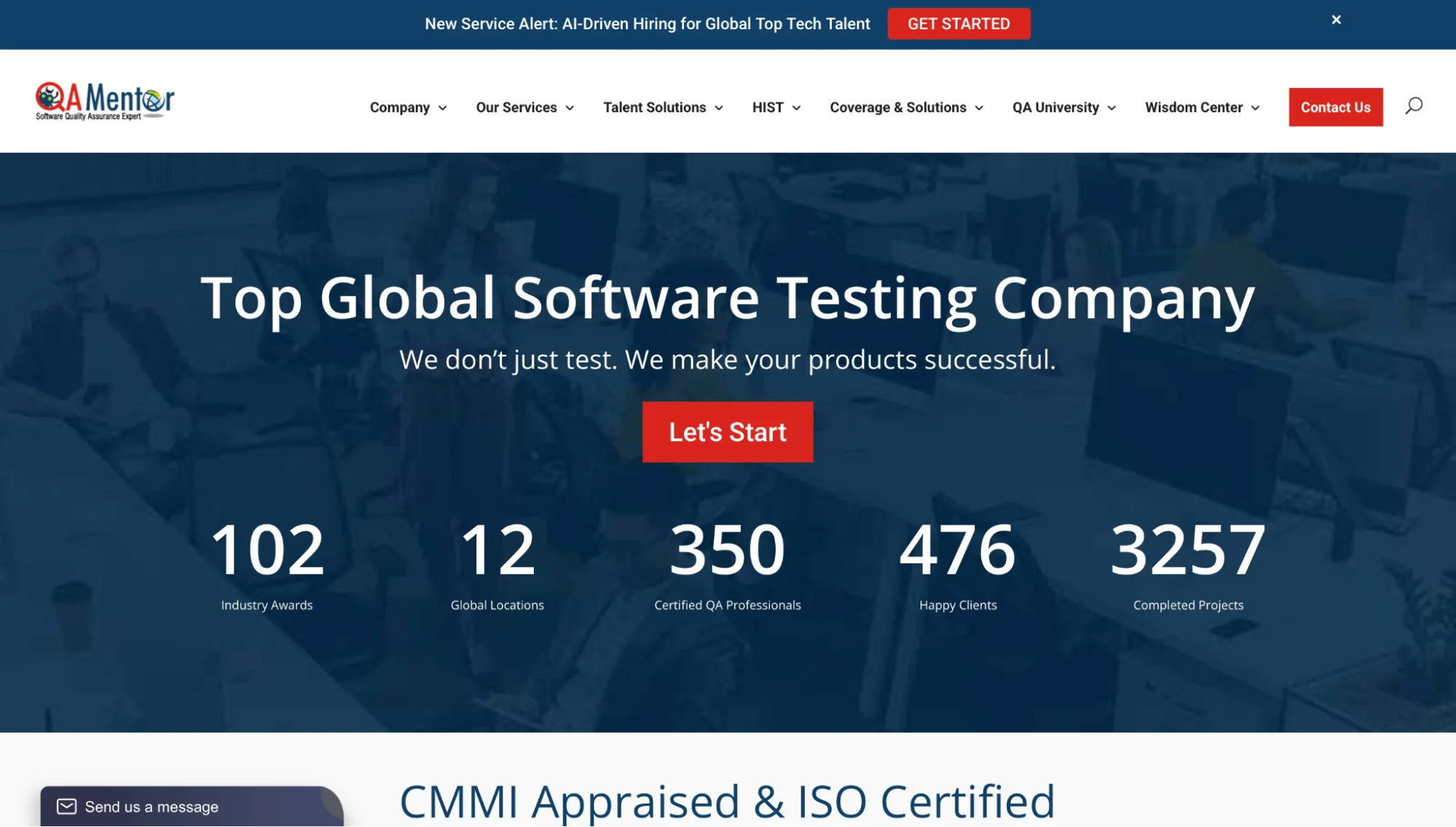
QA Mentor is a QA services provider offering staff augmentation, managed testing teams, and QA advisory services. It serves a broad range of industries and is often selected by companies seeking structured QA processes combined with flexible resourcing.
Key facts
Founded: 2010
Employees: 200–500+
Minimum project size: $5,000+
Hourly rate: $25–$49
Clutch rating: ~4.9/5
QA Staff Augmentation Focus
QA Mentor provides embedded QA engineers and dedicated testing teams that integrate into client development processes. The model supports both short-term augmentation and long-term QA function extension.
Capabilities include manual QA, automation, performance testing, security testing, and QA process auditing. Engineers typically support structured QA frameworks within Agile environments.
Services
Manual testing, automation testing, performance testing, security testing, QA consulting.
Industries
Banking, healthcare, SaaS, insurance, government.
Evidence
High Clutch rating (~4.9/5) with strong review consistency
Clients highlight structured QA delivery and responsiveness
Example feedback: "They adapted quickly to our workflows and ensured consistent QA coverage."
Differentiation
Core strength: Structured QA governance combined with flexible staffing models.
Secondary advantage: Broad QA coverage including compliance and security testing.
Market positioning: Positioned as a structured QA partner for enterprises requiring process maturity.
Tradeoff: Less specialized in deep product engineering integration compared to modern embedded QA providers.
4. TestMatick
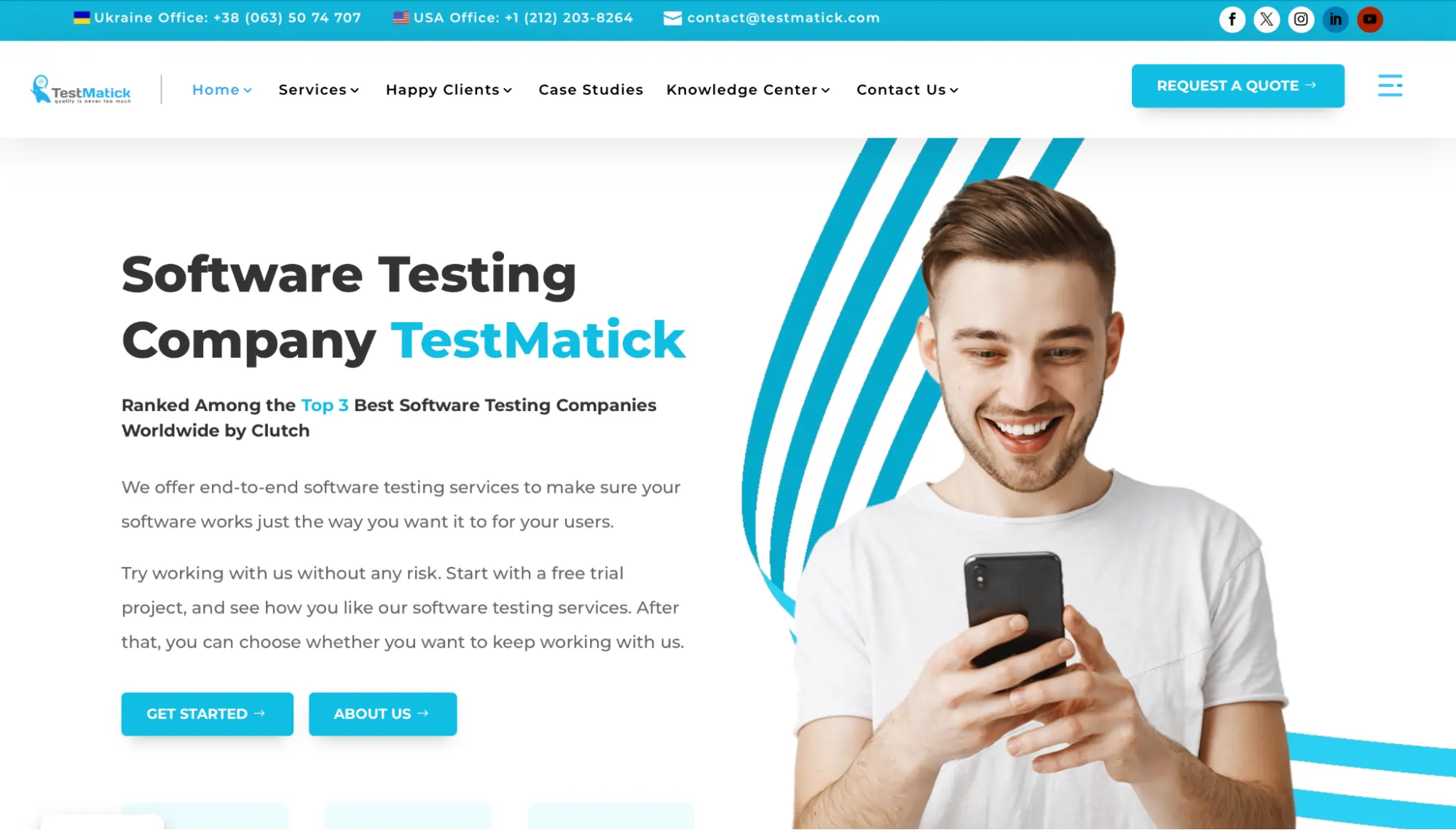
TestMatick is a QA outsourcing provider focused on cost-efficient QA staff augmentation and testing services. It works primarily with startups and mid-market companies that require flexible QA capacity without building internal teams.
Key facts
Founded: 2009
Employees: 100–250+
Minimum project size: $5,000+
Hourly rate: $25–$49
Clutch rating: ~4.9/5
QA Staff Augmentation Focus
TestMatick provides QA engineers embedded into client teams for both short and long-term engagements. The model is optimized for fast onboarding and predictable QA execution across Agile environments.
Services include manual testing, automation testing, mobile QA, and regression testing with flexible scaling options.
Services
Manual testing, automation testing, mobile testing, regression testing.
Industries
SaaS, e-commerce, media, healthcare.
Evidence
Strong Clutch ratings (~4.9/5) with consistent positive feedback
Clients emphasize fast onboarding and cost efficiency
Example feedback: "They integrated quickly and provided stable QA coverage at scale."
Differentiation
Core strength: Cost-efficient QA augmentation with fast deployment capability.
Secondary advantage: Reliable manual and regression testing capacity for Agile teams.
Market positioning: Positioned as a practical QA staffing partner for startups and mid-market teams.
Tradeoff: Limited enterprise-scale transformation or deep QA consulting capability.
5. a1qa
a1qa is a large-scale QA services provider offering managed testing and staff augmentation for enterprise clients. It supports global organizations with structured QA delivery models and multi-team engagement capabilities.
Key facts
Founded: 2003
Employees: 1,000+
Minimum project size: $10,000+
Hourly rate: $25–$49
Clutch rating: ~4.7/5
QA Staff Augmentation Focus
a1qa provides dedicated QA teams and embedded engineers capable of integrating into enterprise SDLC environments. Engagements typically involve structured QA governance and long-term testing programs.
Capabilities include functional testing, automation frameworks, performance testing, and security testing.
Services
Manual testing, automation testing, performance testing, security testing, QA consulting.
Industries
Finance, telecom, healthcare, retail, enterprise IT.
Evidence
Large-scale enterprise client portfolio
Consistent Clutch reviews highlighting structured delivery
Example feedback: "Their structured QA processes improved our testing discipline."
Differentiation
Core strength: Enterprise-scale QA delivery with strong governance structures.
Secondary advantage: Ability to support large multi-team QA programs.
Market positioning: Positioned as a traditional enterprise QA outsourcing provider.
Tradeoff: Less agile and product-embedded compared to modern staff augmentation specialists.
6. Qualitest
Qualitest is one of the largest independent QA engineering companies globally, offering enterprise QA transformation, automation, and staff augmentation services. It focuses heavily on digital transformation programs and complex enterprise systems.
Key facts
Founded: 1997
Employees: 3,000+
Minimum project size: $50,000+
Hourly rate: $50–$99
Clutch rating: ~4.7/5
QA Staff Augmentation Focus
Qualitest provides embedded QA engineers for enterprise-grade transformation programs. Teams are typically integrated into large engineering organizations undergoing modernization.
Capabilities include AI-driven testing, automation engineering, performance testing, and digital assurance.
Services
Automation testing, performance testing, AI-driven QA, digital assurance, QA consulting.
Industries
Banking, healthcare, telecom, retail, government.
Evidence
Extensive enterprise transformation case studies
Strong presence in large regulated industries
Example feedback: "They helped us transition to automated QA pipelines."
Differentiation
Core strength: Large-scale QA transformation and enterprise modernization expertise.
Secondary advantage: Strong automation and AI-driven QA capabilities.
Market positioning: Positioned as an enterprise QA transformation leader.
Tradeoff: High-cost, enterprise-oriented model not optimized for startups or mid-market agility.
7. BugRaptors
BugRaptors is a QA services company focused on automation-driven testing and staff augmentation for startups and mid-market companies. It emphasizes cost efficiency and rapid QA team deployment.
Key facts
Founded: 2016
Employees: 200–500+
Minimum project size: $5,000+
Hourly rate: $25–$49
Clutch rating: ~4.8/5
QA Staff Augmentation Focus
BugRaptors provides embedded QA engineers supporting Agile teams across functional and automation testing needs. The model is designed for scalable QA execution in fast-moving product environments.
Capabilities include manual QA, automation testing, API testing, and mobile testing.
Services
Manual testing, automation testing, API testing, mobile testing.
Industries
SaaS, fintech, e-commerce, education.
Evidence
Strong Clutch reviews highlighting responsiveness and automation skills
Clients emphasize fast integration into Agile workflows
Example feedback: "Their QA engineers became part of our sprint process immediately."
Differentiation
Core strength: Automation-oriented QA delivery for fast-growing product teams.
Secondary advantage: Strong cost-performance balance for mid-market companies.
Market positioning: Positioned as a flexible QA execution partner for scaling SaaS teams.
Tradeoff: Less enterprise governance and strategic QA consulting depth.
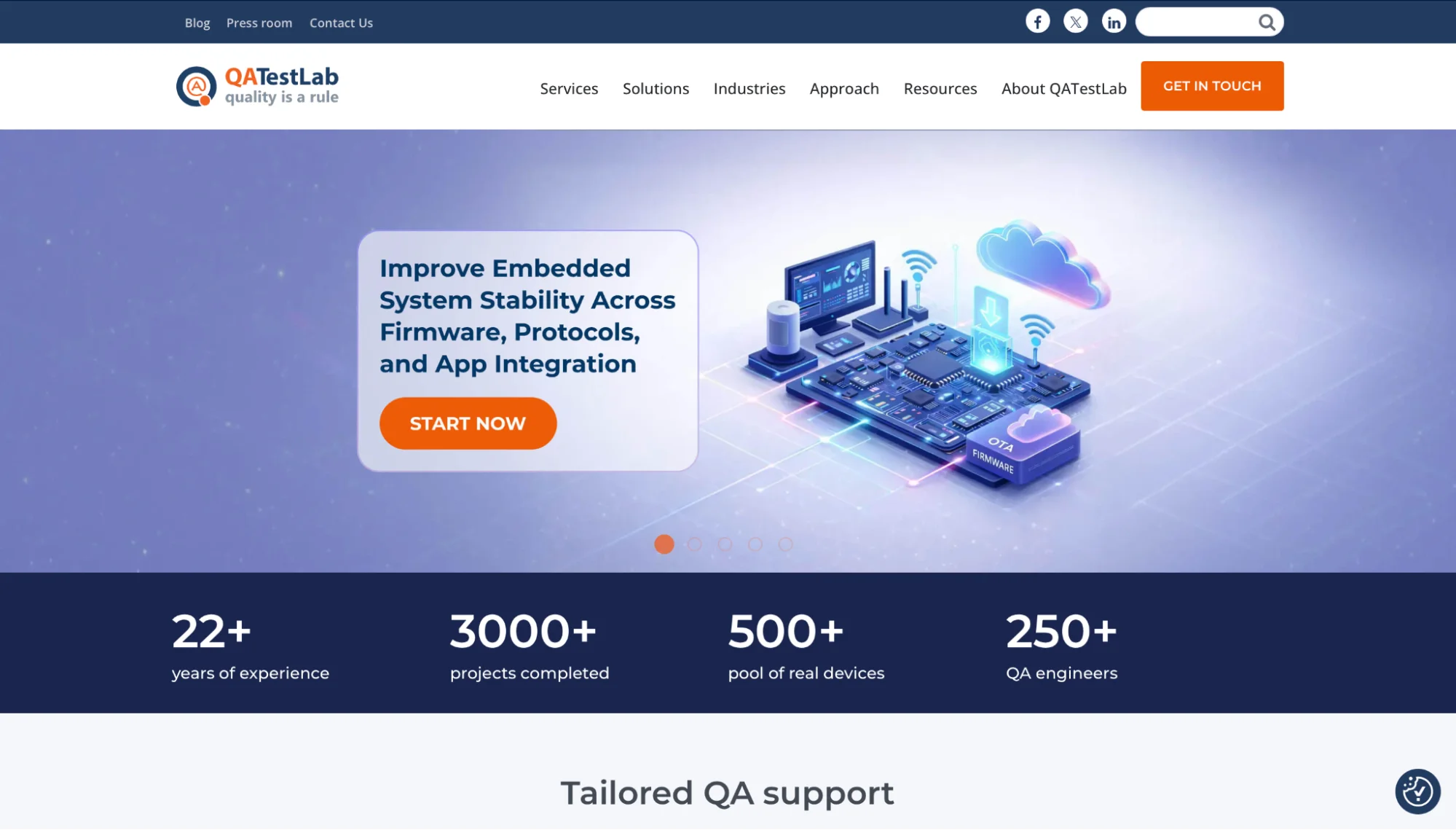
8. QATestLab
QATestLab is a QA outsourcing company providing structured testing services and staff augmentation across multiple industries. It focuses on reliable QA execution and long-term embedded team support.
Key facts
Founded: 2005
Employees: 500–1,000+
Minimum project size: $5,000+
Hourly rate: $25–$49
Clutch rating: ~4.8/5
QA Staff Augmentation Focus
QATestLab provides QA engineers embedded into Agile teams for continuous testing support. Engagements cover both manual and automated testing workflows.
Capabilities include functional testing, regression testing, mobile QA, and localization testing.
Services
Manual testing, automation testing, mobile testing, localization testing.
Industries
Gaming, SaaS, fintech, e-commerce.
Evidence
Strong global client base with consistent Clutch ratings
Clients highlight reliability and structured QA delivery
Example feedback: "They consistently deliver stable regression support."
Differentiation
Core strength: Reliable long-term QA execution with structured processes.
Secondary advantage: Strong coverage across multiple testing types including localization.
Market positioning: Positioned as a stable QA delivery partner for ongoing testing needs.
Tradeoff: Less innovation-driven or automation-advanced compared to newer QA specialists.
9. QualityLogic
QualityLogic is a US-based QA services provider with strong expertise in compliance, accessibility testing, and embedded QA engineering. It supports regulated industries requiring high testing rigor.
Key facts
Founded: 1986
Employees: 100–250+
Minimum project size: $10,000+
Hourly rate: $50–$99
Clutch rating: ~4.8/5
QA Staff Augmentation Focus
QualityLogic provides embedded QA engineers for compliance-heavy and enterprise environments. The focus is on precision testing and regulatory alignment.
Capabilities include accessibility testing, manual QA, automation, and compliance testing.
Services
Manual testing, automation testing, accessibility testing, compliance testing.
Industries
Healthcare, utilities, publishing, enterprise software.
Evidence
Strong reputation in accessibility and compliance QA
Clients highlight regulatory precision and testing rigor
Example feedback: "They ensured full compliance with strict accessibility standards."
Differentiation
Core strength: Accessibility and compliance-focused QA expertise.
Secondary advantage: High-precision manual testing for regulated environments.
Market positioning: Positioned as a compliance-first QA engineering partner.
Tradeoff: Less suited for fast-moving SaaS product experimentation environments.
10. ImpactQA
ImpactQA is a global QA services provider offering staff augmentation and managed testing services. It supports mid-market and enterprise clients with structured QA delivery and automation capabilities.
Key facts
Founded: 2010
Employees: 200–500+
Minimum project size: $10,000+
Hourly rate: $25–$49
Clutch rating: ~4.8/5
QA Staff Augmentation Focus
ImpactQA provides embedded QA engineers integrated into Agile development teams. Engagements cover both functional and automation testing across multiple platforms.
Capabilities include manual testing, automation, performance testing, and mobile QA.
Services
Manual testing, automation testing, performance testing, mobile testing.
Industries
Healthcare, SaaS, retail, logistics.
Evidence
Strong Clutch presence with consistent positive reviews
Clients highlight structured delivery and reliability
Example feedback: "They stabilized our release cycles through consistent QA support."
Differentiation
Core strength: Balanced QA delivery across manual and automation disciplines.
Secondary advantage: Strong adaptability across industries and engagement types.
Market positioning: Positioned as a general-purpose QA staff augmentation provider.
Tradeoff: Less specialized differentiation compared to niche QA leaders.
Choosing a QA Staff Augmentation Partner
Selecting a QA staff augmentation provider requires evaluating real engineering integration capability rather than vendor size or brand visibility.
Key evaluation factors include:
Depth of QA engineering expertise in relevant tech stacks
Speed of onboarding into Agile workflows
Communication quality and participation in sprint processes
Ability to integrate into CI/CD pipelines and ownership cycles
Scalability of embedded QA teams
Evidence of measurable delivery outcomes (not just activity)
Conclusion
QA staff augmentation has become a foundational operating model for modern software teams. The strongest providers are not defined by size or marketing visibility, but by their ability to embed engineers into real delivery workflows and improve release outcomes over time.
Across the top QA staff augmentation companies in this ranking, the most effective providers demonstrate consistent patterns: deep QA engineering expertise, flexible engagement models, and verifiable client outcomes in real production environments. The key differences lie not in what vendors claim to do, but in how deeply they integrate into engineering teams and systems—and how consistently they improve software delivery performance.