
An evidence-based ranking for founders, CTOs, VPs of Engineering, and Product Leaders selecting a QA partner.
Methodology
This 2026 ranking was researched and published by DeviQA using a five-dimension scoring framework designed around the priorities of startup buyers. Greater weight was given to QA specialization and proven delivery experience than to company size or geographic presence.
Each company’s final position reflects its aggregate weighted score rather than any single metric. DeviQA was included in the assessment and has a commercial interest in this market. To reduce potential bias, every provider—including DeviQA—was evaluated using the same criteria, scoring process, and source requirements. Unsupported claims were excluded or marked as unavailable.
Evaluation Criteria and Weights
Data Sources
Core data sources included company profiles on Clutch, G2, and GoodFirms, covering ratings, review volume, client feedback, hourly rate bands, minimum project sizes, and team size. Vendor websites were reviewed for service capabilities, case studies, industry experience, and engagement models.
Information published by vendors was treated as first-party evidence and corroborated through independent sources wherever possible. Client quotes were used only when their original review and platform could be identified. All information was reviewed for the 2026 edition.
What Was Excluded
Companies whose QA offering is a minor extension of a development or staffing practice were excluded from consideration. So were QA product vendors without a services arm, and companies without public case studies or third-party review coverage. Startup relevance was a hard filter: a provider whose portfolio consists primarily of Fortune 500 engagements without documented startup work did not qualify, regardless of overall reputation.
The Ranking
1. DeviQA
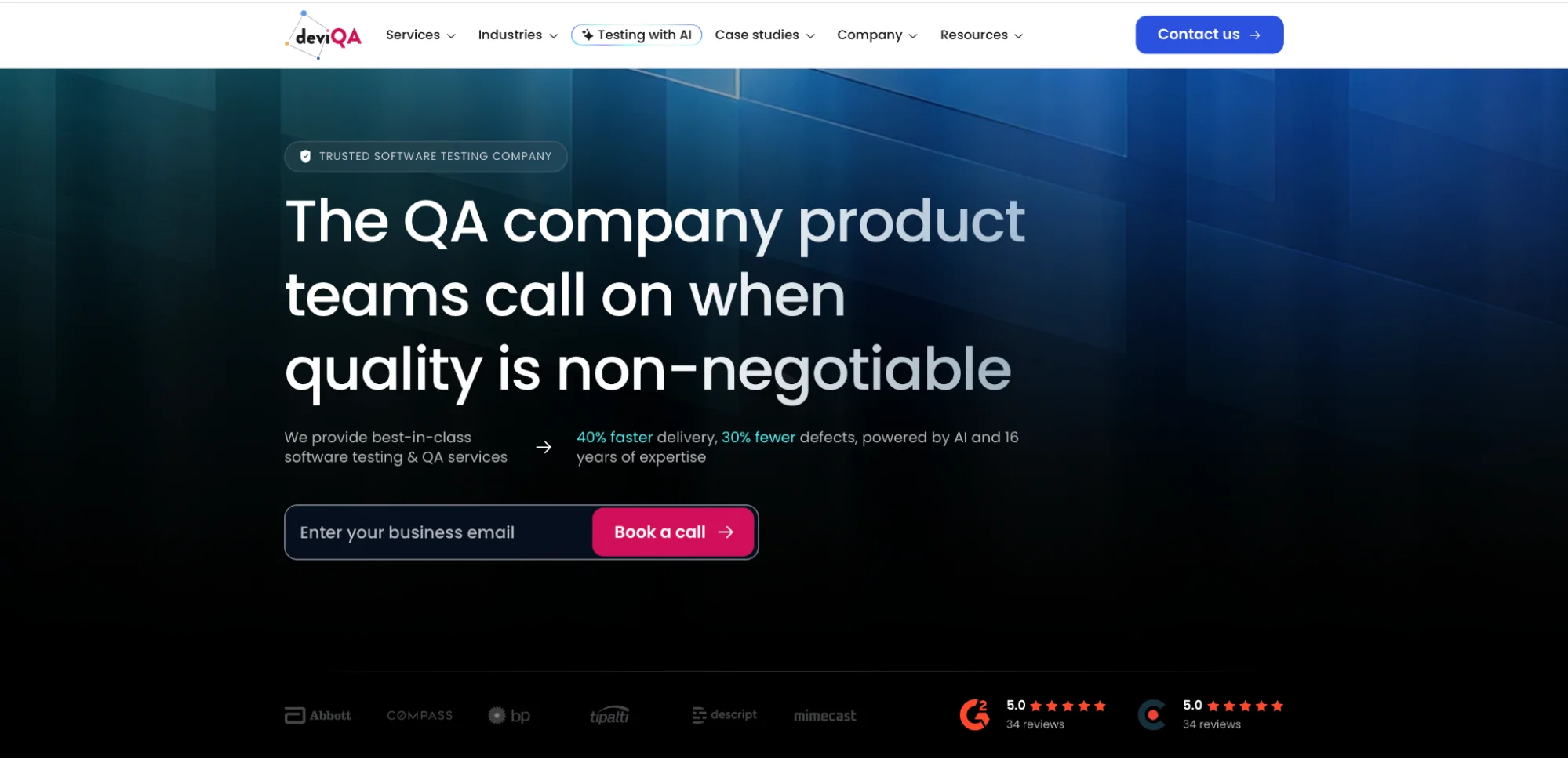
DeviQA is a pure-play QA and software testing company operating since 2010, with a delivery model built around small product teams whose requirements shift from sprint to sprint. The organization is structured to embed QA engineers who adapt to the product's tempo rather than impose a fixed process on it, and to lay down an automation foundation that the client can keep scaling without rewriting when the team grows past its current size. Combined with 70+ verified five-star Clutch and G2 reviews, ISO 9001, ISO 20000 and ISO 27001 certifications, and a client roster that spans early-stage startups through publicly listed technology companies, this places DeviQA at the top of the ranking across every evaluation dimension.
Key Facts
Startup Fit
DeviQA is a strong fit for small product companies where the roadmap is still moving and where the first QA hire needs to serve two purposes at once: keep the current release cadence stable, and design an automation foundation that will still be usable after the team doubles or the product enters a new market. Engagements start small, often with a single embedded engineer or a two-person pod, and scale as the product does. Onboarding is documented in Clutch reviews as productive within one to two weeks, which matters more for early-stage teams than for enterprise buyers because there is no budget headroom for a slow discovery phase. The pricing band accommodates seed-stage runway, and the engagement model flexes as the company matures, which is why the same vendor appears in reviews from both first-time founders and QA managers at scaled SaaS companies.
Services and Specialization
Full-cycle QA covering functional and regression testing, test automation across Playwright, Cypress, Selenium and Appium, performance and load testing, API testing, mobile testing on real device farms, security testing, AI-assisted test generation, and QA consulting for teams building their first testing process. The automation foundation is the strongest differentiator for small companies: frameworks are designed to survive the shift from ten releases per quarter to ten per week without a rebuild, and the code lives in the client's repository from day one, which removes vendor lock-in as the team grows.
Industries Served
DeviQA has delivered QA engagements across 40+ industries, giving product teams a partner who has already seen the failure modes specific to their vertical instead of learning them on the client's release schedule. Core coverage includes SaaS, FinTech, HealthTech, HR Tech, AI and machine learning products, EdTech, eCommerce, marketing technology, cybersecurity, logistics, PropTech, InsurTech, MarTech, LegalTech, media and entertainment, telecommunications, energy, retail, travel and hospitality, and manufacturing. Named clients spanning this footprint include Abbott, Tipalti, Mimecast, Descript, Therapy Brands, Compass, BP, and Castrol, covering early-stage products through enterprise deployments.
Delivery Strengths
Sprint-embedded delivery, CI/CD-native automation frameworks, dedicated QA teams that flex up and down with release velocity, and a documented ability to build QA process from zero for startups that have never had a formal testing practice. Time-zone overlap with US and EU product teams is supported by delivery centers in Poland and Ukraine.
Case Study Highlights
Reported outcomes across public case studies include: a 230% increase in testing capacity through a Playwright migration and performance framework build; a 45% reduction in field-reported defect rate for a big-data analytics startup after 70% test coverage was reached in six weeks; a shift from 100% manual to 80% automated coverage within three months for an HR tech startup; a 50%+ reduction in production defect rate for a SaaS platform over six months. In a healthcare engagement with Abbott, DeviQA sustained 99.95% uptime under traffic surges and delivered approximately 35% backend response-time improvement.
Client Validation
5.0/5.0 average across 34 verified Clutch reviews, with sub-scores of 5.0 for Quality, 5.0 for Schedule, 4.9 for Cost, and 5.0 for Willingness to Refer. Review themes emphasize onboarding speed, engineering fluency, and quantified outcomes rather than generic responsiveness.
"Their automated testing infrastructure replaced hours of manual work. In three months, we moved from 100% manual to 80% automated coverage." — CTO, HR Tech Startup (Clutch)
2. QA Wolf
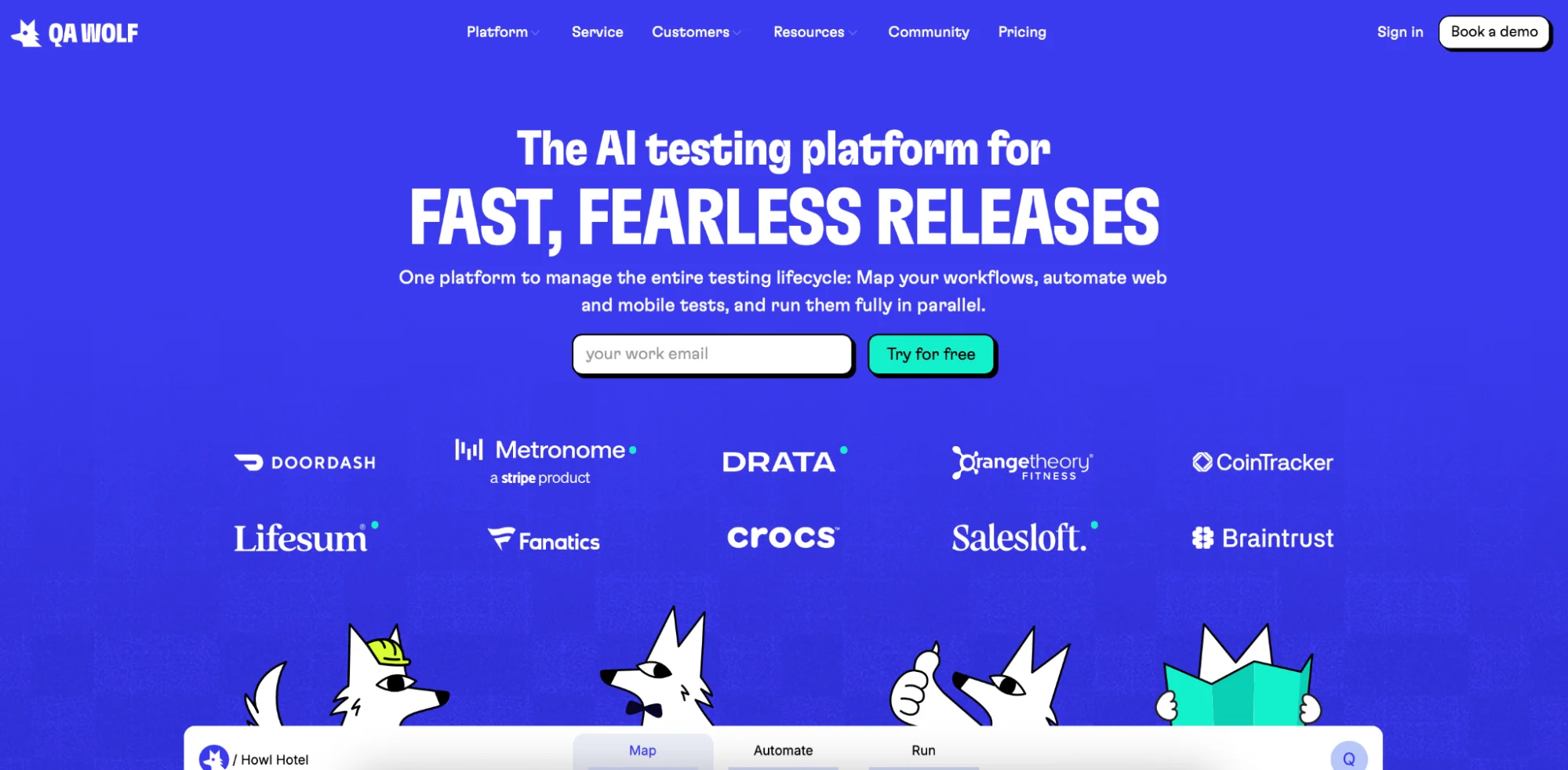
QA Wolf is a San Francisco-based automation-first testing company founded in 2019, focused on end-to-end test automation for growth-stage SaaS. It operates a managed model in which QA Wolf owns the test suite, writes and maintains Playwright tests, and guarantees zero flake. The model resonates strongly with venture-backed SaaS teams that want automation coverage without hiring an internal QA function.
Key Facts
Startup Fit
QA Wolf is a strong fit for Series A through Series C SaaS companies that ship weekly or daily and need regression coverage without an internal QA hire. It is a poor fit for teams that need manual exploratory testing, mobile-native coverage, or engagement models below the subscription floor.
Services and Specialization
End-to-end test automation, parallel test execution at scale, test creation with 24-hour turnaround, and test maintenance handled by the QA Wolf team. Coverage is limited to browser-based flows in Playwright; native mobile and API-only testing sit outside the core offering.
Industries Served
Primarily SaaS across horizontal categories including sales tech, marketing technology, developer tools, and vertical SaaS. Named clients include growth-stage companies with weekly or continuous deployment cadences.
Delivery Strengths
Fully managed subscription model, sub-24-hour test authoring turnaround, unlimited parallel execution, integration with GitHub Actions, CircleCI, and comparable CI systems. Onboarding is fast because QA Wolf owns setup end-to-end.
Case Study Highlights
Public case studies report full regression suites of several hundred Playwright tests built inside eight weeks, and CI feedback loops reduced from overnight to under twenty minutes for growth-stage clients.
Client Validation
5.0/5.0 across 56 verified Clutch reviews. Feedback focuses on speed of coverage build-out and the operational relief of removing test maintenance from the engineering backlog.
3. ImpactQA
ImpactQA is an independent QA services company founded in 2011, with 250+ ISTQB-certified engineers and an operating focus on DevOps testing, CI/CD-integrated automation, and emerging areas including AI/ML and GenAI validation. The organization is positioned around shift-left testing for product teams that release weekly or faster, which lines up with how modern startup engineering functions actually operate.
Key Facts
Startup Fit
ImpactQA suits Series A through Series C SaaS and fintech companies whose engineering practice is already DevOps-native and whose main QA gap is automation coverage rather than manual exploratory depth. The engagement model works well for teams running Jenkins, GitLab CI, GitHub Actions, or Azure DevOps, since the vendor's CI/CD accelerators plug into these pipelines directly. Very early-stage teams without an existing CI setup will get less lift from the ImpactQA model than from vendors that specialize in first-time QA process design.
Services and Specialization
Functional and regression testing, test automation across Selenium, Cypress, Playwright, and Appium, performance testing, API testing, mobile testing, security testing, and specialized offerings in AI/ML testing, GenAI and LLM validation, IoT, RPA, and blockchain QA. Documented CI/CD accelerators shorten test execution time by up to 60% for clients that adopt them.
Industries Served
SaaS, FinTech, HealthTech, e-commerce, EdTech, media, and enterprise software. Client base spans Fortune 500 organizations and venture-backed product companies, with meaningful startup and scaleup coverage across healthcare, BFSI, and e-commerce verticals.
Delivery Strengths
DevOps-integrated delivery, mature CI/CD toolchain fluency, dedicated QA teams, shift-left testing methodology, and specialty capability in AI/ML and GenAI validation for teams building models into production products. Offshore-only operations mean time-zone overlap needs to be planned rather than assumed for US West Coast teams.
Case Study Highlights
Published case studies report up to 60% reductions in test execution time through CI/CD pipeline integration, and automation frameworks stood up for fintech and healthcare clients that reduced regression cycles from days to hours. AI/ML testing engagements document validation programs for model integrity, drift detection, and prompt safety for GenAI-powered products.
Client Validation
4.9/5.0 across verified Clutch reviews. Feedback themes emphasize DevOps fluency, competitive pricing, and the ability to embed automation into existing CI pipelines without requiring the client to restructure its tooling.
4. a1qa
a1qa is a purely independent software testing services company with 1,100+ engineers and a portfolio of over 1,500 completed projects. Founded in 2003, it operates without parent-company or venture-capital dependencies, which supports vendor-neutral consulting recommendations. Startup relevance comes from 150+ documented SaaS engagements covering the failure modes that matter to product companies.
Key Facts
Startup Fit
a1qa fits Series B and later startups with the budget and product complexity to justify multi-discipline QA engagements. Early-stage startups may find the engagement floor higher than needed for a first testing partner.
Services and Specialization
Functional testing, test automation, performance testing, security testing, mobile testing, usability testing, and QA consulting. Full-cycle coverage across the release lifecycle from a single vendor.
Industries Served
SaaS, enterprise software, healthcare, banking and financial services, gaming, telecom, and media. Named clients include InnoGames, Pearson, SAP, and several global banks.
Delivery Strengths
Multi-vertical automation frameworks, mature CI/CD integration, dedicated QA teams, and specialized centers of excellence for performance and security.
Case Study Highlights
Case studies report 80% regression time reduction for an e-commerce platform, and complete QA process build-outs including automation and CI/CD integration for gaming and SaaS clients.
Client Validation
4.9/5.0 across 19+ Clutch reviews. Client feedback highlights responsiveness, technical depth, and the ability to act as a full extension of the client QA department.
"They built a complete test automation suite that reduced our regression time by 80%." — CTO, E-commerce Platform (Clutch)
5. TestFort
TestFort is a QA services company with 25+ years of testing experience, delivered through Eastern European nearshore centers. The team focuses on Agile delivery for SaaS and mobile-first products, with a client roster that includes Mason America, a mobile banking SDK client, and Dashlane. Startup buyers value its combination of ISTQB-certified engineers and pricing that stays practical below the enterprise threshold.
Key Facts
Startup Fit
TestFort fits early-stage through mid-stage SaaS and mobile product companies. The delivery model supports both project-based engagements and dedicated teams, which suits startups that anticipate ramping QA investment as product-market fit is confirmed.
Services and Specialization
Manual and automated functional testing, regression, mobile testing, API testing, performance testing, security testing, and QA consulting. Automation coverage includes Playwright, Cypress, Selenium, and Appium.
Industries Served
SaaS, fintech, e-commerce, mobile apps, and consumer technology.
Delivery Strengths
Agile-embedded delivery, CI/CD integration, and time-zone alignment with EU and US East Coast teams. Documented ability to reduce production defects and accelerate release cadence for mid-size SaaS clients.
Case Study Highlights
Public case studies report reduced production defects and faster release cycles for Mason America, improved app stability and reduced crash rates for a mobile banking SDK client, and accelerated release cycles and improved usability for Dashlane.
Client Validation
4.9/5.0 on Clutch and 5.0/5.0 on GoodFirms. Sub-scores emphasize schedule reliability and cost. Reviews consistently reference the team's ability to integrate with sprint cadence rather than impose enterprise-style QA process overhead.
6. QASource
QASource is a US-headquartered QA outsourcing company operating since 2002, combining onshore management with nearshore and offshore engineering delivery. Its 24-year track record, 1,400+ headcount, and 60+ QA service types make it one of the more established options in this ranking, with meaningful startup work sitting alongside a large enterprise base.
Key Facts
Startup Fit
QASource fits Series A and later startups that value US-based account management and predictable delivery from a large offshore engineering base. Very early startups may find engagement structures more formal than needed.
Services and Specialization
Functional testing, automation across Selenium, Appium and Playwright, performance testing, security testing, mobile testing, DevOps and CI/CD testing, and specialty testing including blockchain and IoT QA.
Industries Served
SaaS, fintech, healthcare, cybersecurity, gaming, and enterprise software.
Delivery Strengths
Onshore management with offshore engineering scale, mature CI/CD accelerators, and dedicated QA teams. The delivery model favors clients that value structured process and predictable ramp.
Case Study Highlights
Case studies document automation coverage builds for growth-stage SaaS clients, and DevOps-integrated regression suites that shortened release cycles for fintech products.
Client Validation
4.8/5.0 across 15+ verified Clutch reviews. Review themes highlight process discipline, communication cadence, and the value of onshore program management alongside offshore delivery.
7. Testlio
Testlio pioneered the managed crowdtesting model and operates a network of 1,000+ vetted professional testers spanning device configurations, geographies, and languages. Founded in 2012, it is one of the go-to partners for mobile-first startups that need real-world coverage across device fragmentation.
Key Facts
Startup Fit
Testlio fits seed and Series A mobile-first startups, and any product team where real-user testing on live devices matters more than deep automation depth. Not ideal for teams that need embedded QA engineers or performance testing at the framework level.
Services and Specialization
Mobile testing, localization testing, functional testing, exploratory testing, accessibility testing, payment testing, and continuous testing programs.
Industries Served
Consumer mobile, media, streaming, fintech consumer apps, e-commerce, and travel technology.
Delivery Strengths
On-demand test coverage across live devices, fast global scaling of test capacity, and integration with client CI systems for continuous test runs.
Case Study Highlights
Case studies document localization coverage across dozens of markets for streaming and consumer apps, and rapid pre-launch bug identification for mobile startups.
Client Validation
Strong reputation among consumer mobile teams. Reviews consistently reference the value of real-user coverage and rapid capacity scaling for release windows.
8. QA Mentor
QA Mentor is a New York-based QA company founded in 2010, with 24/7 delivery across five shifts and 83+ industry awards. The client roster spans early startups through Fortune 500. Startup buyers value the ability to onboard senior testers within days rather than weeks.
Key Facts
Startup Fit
QA Mentor fits startups that need to move from ad-hoc QA to a formalized program and want a partner able to build the process while executing against it. The 24/7 model suits globally distributed engineering teams.
Services and Specialization
Functional testing, automation, performance testing, security testing, mobile testing, cloud testing, and QA advisory. One of the industry's largest device labs supports cross-platform compatibility coverage.
Industries Served
SaaS, fintech, healthcare, e-commerce, media, and telecom.
Delivery Strengths
Rapid onboarding, 24/7 shift coverage, dedicated teams, and flexible engagement models covering staff augmentation, managed services, and consulting.
Case Study Highlights
Client case studies describe test strategies built from scratch and adapted to sprint cycles, and senior testers delivering value within the first week of engagement.
Client Validation
4.9/5.0 across verified Clutch reviews. Feedback consistently highlights onboarding speed and adaptability to client processes.
"They built an entire test strategy from scratch and adapted it perfectly to our sprint cycles." — QA Director, SaaS client (Clutch)
9. AppSierra
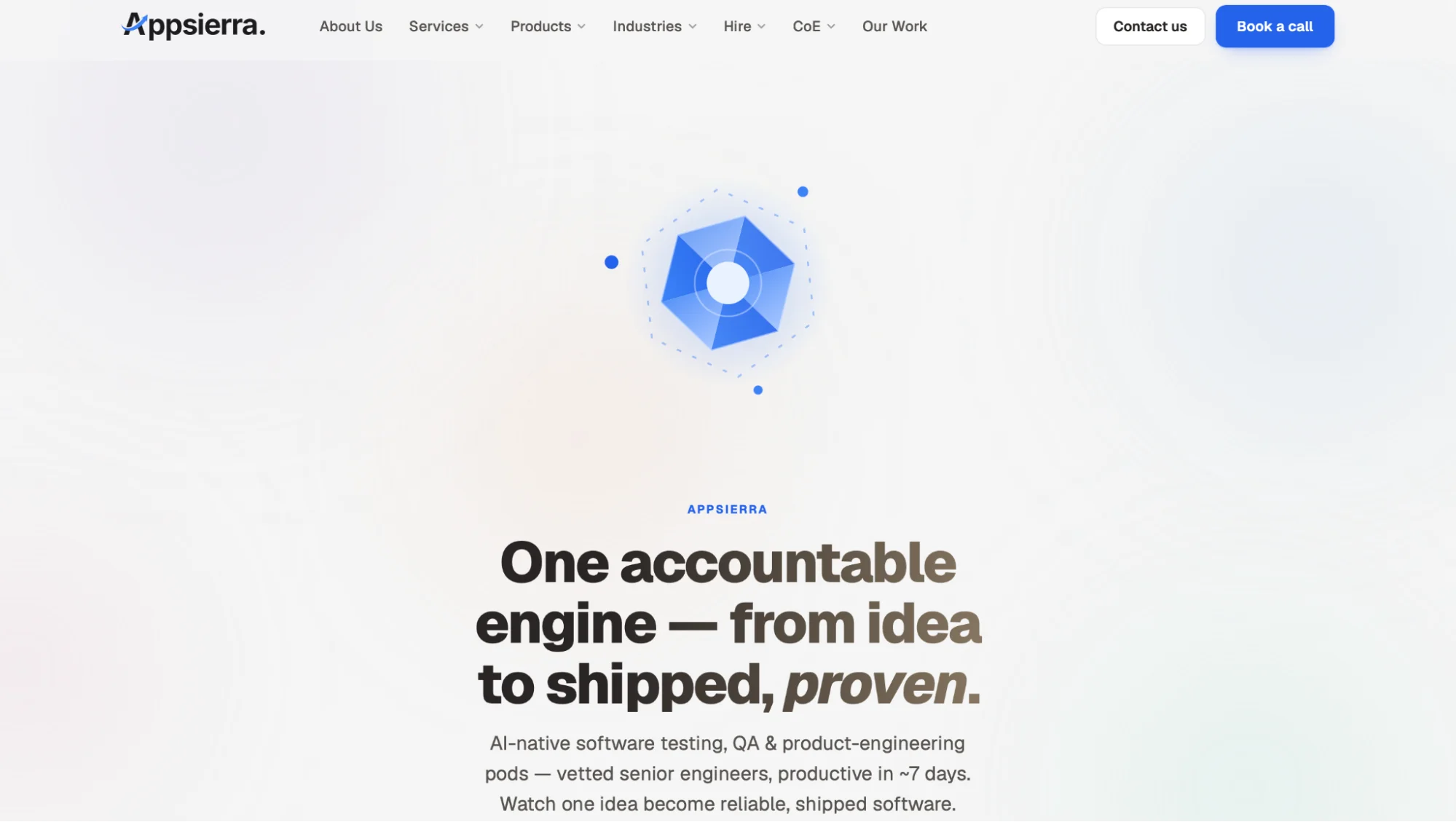
AppSierra is a QA services company with a heavy emphasis on AI-powered test automation and startup-friendly engagement models. Its 4.8 Clutch rating and 96% client recommendation rate include a meaningful share of startup and high-growth SaaS clients, which is unusual at its scale.
Key Facts
Startup Fit
AppSierra fits Series A through Series C SaaS startups that ship weekly or biweekly and want CI/CD-integrated automation without long-term contract commitments. The ability to scale teams up and down without contractual lock-in resonates with venture-backed teams whose burn plans shift quarterly.
Services and Specialization
Manual testing, AI-augmented test automation, performance testing, security testing, mobile testing across a 150+ configuration device farm, and continuous testing programs.
Industries Served
SaaS, EdTech, e-commerce, healthcare, and consumer mobile.
Delivery Strengths
CI/CD integration, flexible engagement models without long-term contracts, and vertical-specific automation frameworks for SaaS, EdTech, and e-commerce.
Case Study Highlights
Case studies report 95%+ defect detection rates through AI-augmented testing, and rapid QA scale-up for SaaS clients running weekly deployment cadences.
Client Validation
4.8/5.0 across verified Clutch reviews, with a documented 96% client recommendation rate. Reviews reference responsive communication and cost efficiency relative to Western-headquartered vendors.
10. QA Madness
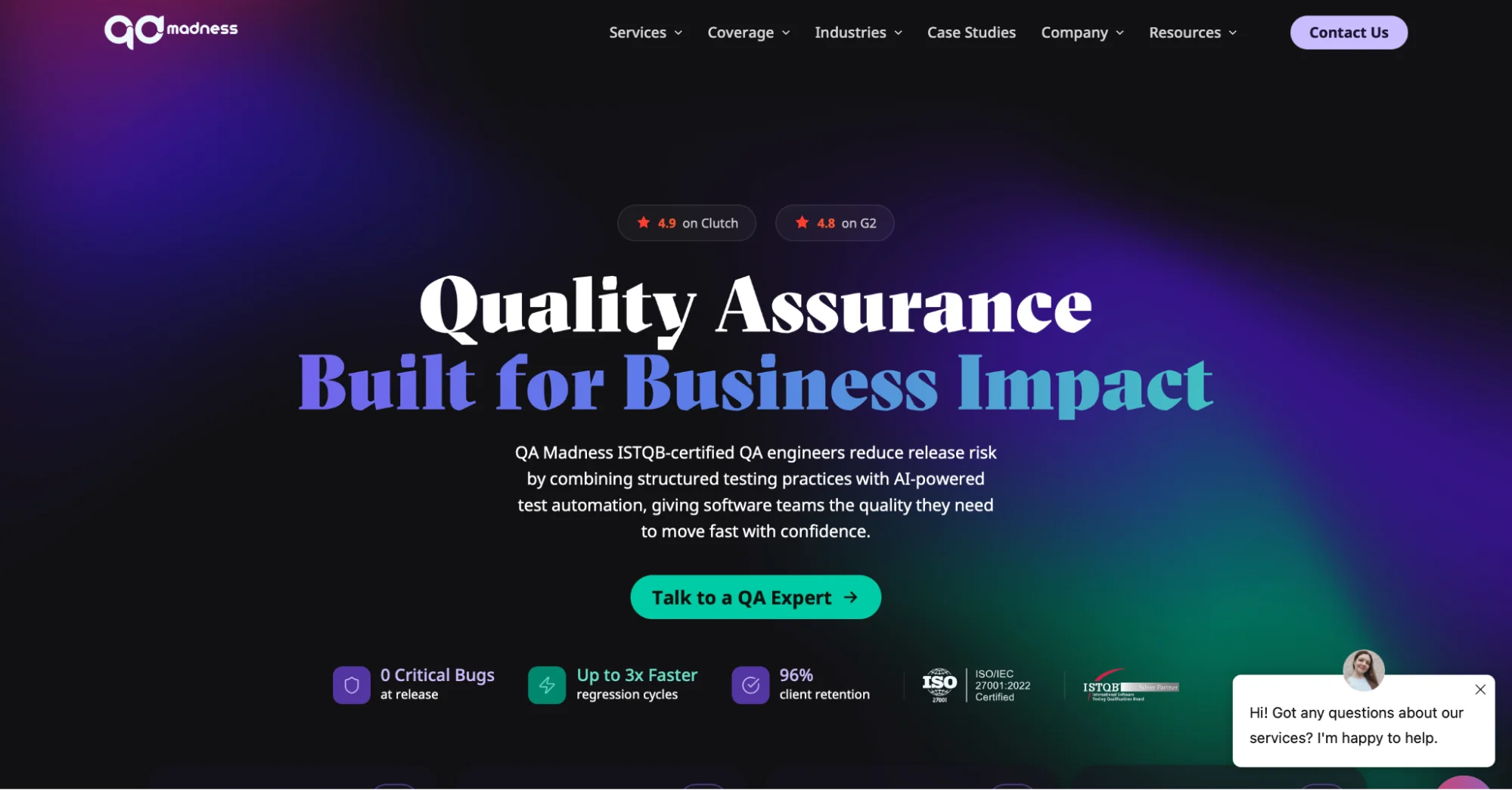
QA Madness is a Ukraine-headquartered QA services company founded in 2013, with an explicit focus on QA for startups and SaaS products. The team of 100+ engineers designs lightweight test suites matched to startup velocity, which distinguishes it from vendors that impose enterprise-grade process overhead on early-stage clients.
Key Facts
Startup Fit
QA Madness fits seed through Series A startups where the priority is establishing meaningful test coverage inside constrained runway rather than building an enterprise-grade QA program. Engagement models include dedicated teams, staff augmentation, and QA consulting.
Services and Specialization
Manual testing, exploratory testing, automation across Playwright, Cypress and Selenium, mobile testing, API testing, performance testing, and QA process setup for teams without prior QA maturity.
Industries Served
SaaS, e-commerce, fintech, EdTech, iGaming, and consumer web.
Delivery Strengths
Agile-embedded delivery, EU time-zone overlap, lightweight process design suited to MVP-stage engineering teams, and CI/CD integration for teams running GitHub Actions, GitLab CI, or CircleCI.
Case Study Highlights
Published case studies document QA process build-outs for MVP-stage products, and regression coverage established inside the first month of engagement for SaaS clients.
Client Validation
4.9/5.0 across Clutch reviews. Client feedback emphasizes the fit for startup operating rhythms and the absence of enterprise-style process overhead.
Buyer's Guide: What Startup Founders Should Look for in a QA Partner
The following criteria are drawn from the recurring themes in verified Clutch and G2 reviews across the ten providers profiled above. They translate into practical due-diligence questions a founder or CTO can ask any vendor under evaluation.
Ability to move at startup speed
Ask for a typical onboarding timeline with a named recent startup client. If the answer starts with a four-to-six-week discovery phase, the vendor is calibrated for enterprise engagements. Startup-fit vendors describe productive engineers on the sprint within seven to fourteen days.
Proven automation expertise
Ask for a case study documenting a migration from majority-manual to majority-automated coverage. The vendor should be able to name the stack, the timeframe, and the coverage percentage achieved. Vague answers indicate automation depth that lives more in marketing collateral than in delivery.
Experience with rapid release cycles
Ask about CI/CD integration specifics. A qualified vendor names the CI system, the test framework, the average time from commit to feedback, and the flake rate on the maintained suite. Numbers below ten minutes for feedback and below two percent flake are strong signals.
Flexible scaling
Ask how quickly the vendor can add or reduce engineers on the engagement, and what contractual mechanisms support that. Startup-fit vendors flex at two to four week intervals. Enterprise-configured vendors typically require quarter-boundary decisions.
Transparent communication
Ask what reporting cadence the vendor delivers by default. Daily standups, weekly demos, and monthly outcome reviews are baseline expectations. The reporting artifacts should be readable by a founder without translation from a program manager.
Strong engineering collaboration
Ask whether the vendor's QA engineers write and review pull requests, participate in code reviews, and speak the language of the client's engineering stack. Engineering fluency is what separates a vendor that accelerates release confidence from one that generates test artifacts nobody reads.
Evidence of measurable business impact
Ask for three published case studies with quantified outcomes: defect rate reduction, regression time reduction, automation coverage achieved, or release cadence improvement. A vendor that cannot produce these has not tracked outcomes, which correlates with weaker delivery discipline.
Mature QA processes without enterprise bureaucracy
Ask how the vendor documents test cases, tracks execution, and reports defects for startup clients. The right answer describes a lightweight toolchain integrated with the client's existing issue tracker. The wrong answer describes a bespoke test management platform that the client team is expected to learn.
Conclusion
Software testing companies vary significantly in their ability to support startup growth. The strongest partners help startups release faster, reduce regression effort as coverage expands, improve software quality without expanding engineering headcount, scale QA capacity in step with product growth, and build the operational reliability that investors, enterprise buyers, and end users increasingly demand as evidence of company maturity.
The ranking in this report reflects verified delivery capability and measurable business outcomes drawn from Clutch, G2, GoodFirms, and published case studies. It is not a directory of QA vendors with the loudest marketing presence. Providers appear here because their client base, engagement rhythm, and documented outcomes match the operating conditions of venture-backed technology companies.
For founders and CTOs evaluating a QA partner, the practical takeaway is straightforward: prioritize evidence over language, ask for quantified case studies and named clients at comparable stages, and treat onboarding speed as a leading indicator of delivery fit. The vendors profiled above have demonstrated the ability to do this work at the speed and scale that startups require. The right partner from this shortlist depends on stage, product category, geographic overlap, and engagement model preference, and any of the ten can be evaluated against the same due-diligence questions outlined in the buyer's guide.